
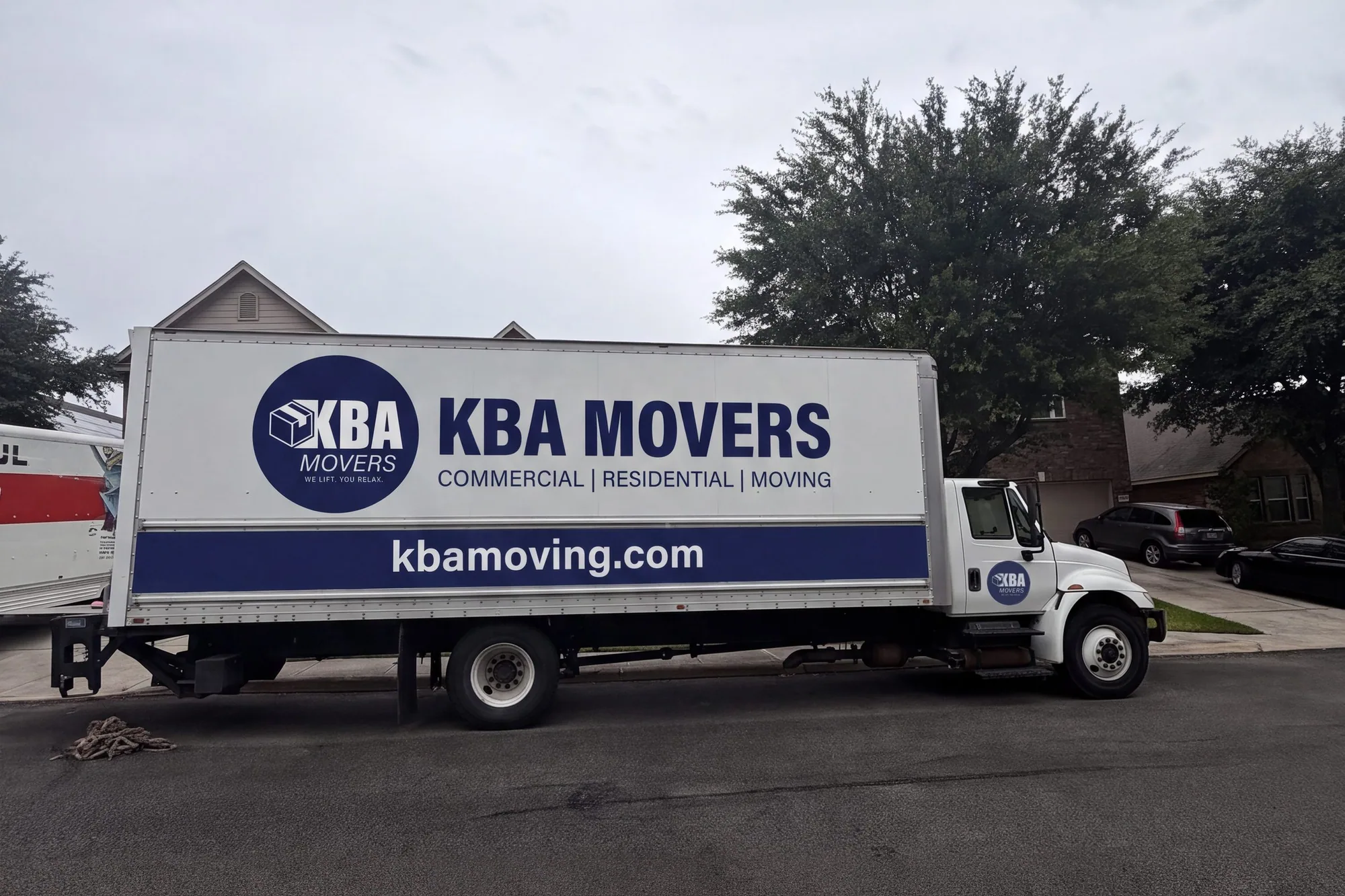
What size moving truck do you need?
This question only comes up if you are renting, because a moving company brings a truck sized for the job and it is their problem to get that right. If you are renting, it is entirely your problem, and the cost of getting it wrong is a lot larger than the difference between two sizes.
The estimate is about volume rather than bedrooms, and there is one item type that breaks every guideline.
Rental sizes and roughly what they are for
Rental fleets are broadly consistent. Small vans and the smallest box trucks handle a studio or a small one-bedroom. Mid-size box trucks are aimed at one to two bedrooms. The larger sizes are for two to three bedrooms, and the biggest trucks in a consumer fleet are aimed at three bedrooms and up.
Treat those descriptions as the rental company's optimism rather than as measurements. They assume a well-packed load, which means somebody who loads trucks for a living, and they assume you have less in the garage than you do.
Estimate on volume, and count the places you forgot
Walk the house and think in terms of what fills space rather than what is expensive. Sofas, mattresses, wardrobes, appliances and the boxes are the bulk of any load.
Then add the four spaces that are missing from almost every estimate: the garage, the basement, the shed, and anything already in storage. Between them they routinely account for a size difference, and they are the reason people end up making a second trip.
- Sofas and armchairs, which take far more space than their footprint suggests
- Mattresses and bed frames for every bed in the house
- Wardrobes, dressers and any large case furniture
- Appliances, if they are coming
- Every box, including the ones not packed yet
- The garage, the basement, the shed and any storage unit
- Bikes, lawn equipment, and anything with an awkward shape
Go one size up
If you are between two sizes, take the larger one. The price gap between adjacent sizes is small relative to what a second trip costs in fuel, time and, on a long-distance move, an extra day.
There is also a loading argument. A truck packed to the roof with no room to work is slower to load and more likely to damage something, because there is no space to arrange things properly. A bit of slack is useful rather than wasteful.
The item that breaks the guidelines
Anything genuinely heavy is a separate problem from anything genuinely large. A piano, a gun safe, a full-size chest freezer or a slate pool table does not fit the volume calculation at all, because the constraint is weight, equipment and technique rather than cubic feet.
These are also the items where a rental truck stops being the cheaper option in any meaningful sense, because getting one wrong damages the item, the house, or a person. If there is one of these on your list, it is worth pricing the specialty move for that item alone even if you do everything else yourself.
The other constraint: where the truck goes
Size the truck for the load, then check that the truck fits the addresses. A long box truck needs somewhere to turn, somewhere to park legally, and clearance under anything it passes beneath. Older Des Moines neighborhoods with narrow streets and mature trees over them are where this bites.
Downtown and the East Village add the parking question, and the City of Des Moines runs a moving permit process at requestmovingpermit.dsm.city that needs two business days' notice. A larger truck that cannot get near the door is worse than a smaller one that can, because carry distance costs more than a second trip.