
Moving into a senior community: the week-of plan
The guide to helping a parent downsize covers the months before this: measuring the new apartment, sorting into keep, family, donate and remove, and letting the person moving set the pace. This one starts when the sorting is done and the date is a week away. It is written for the adult child or spouse who is running the day, and it assumes the destination is an independent living apartment, an assisted living suite or a similar community in the Des Moines metro.
The thing that separates a good move-in from a bad one is not how much goes on the truck. It is whether the room is set up and the person is settled before anyone is tired. Everything below is organized around that.
Seven days out: get the community's rules in writing
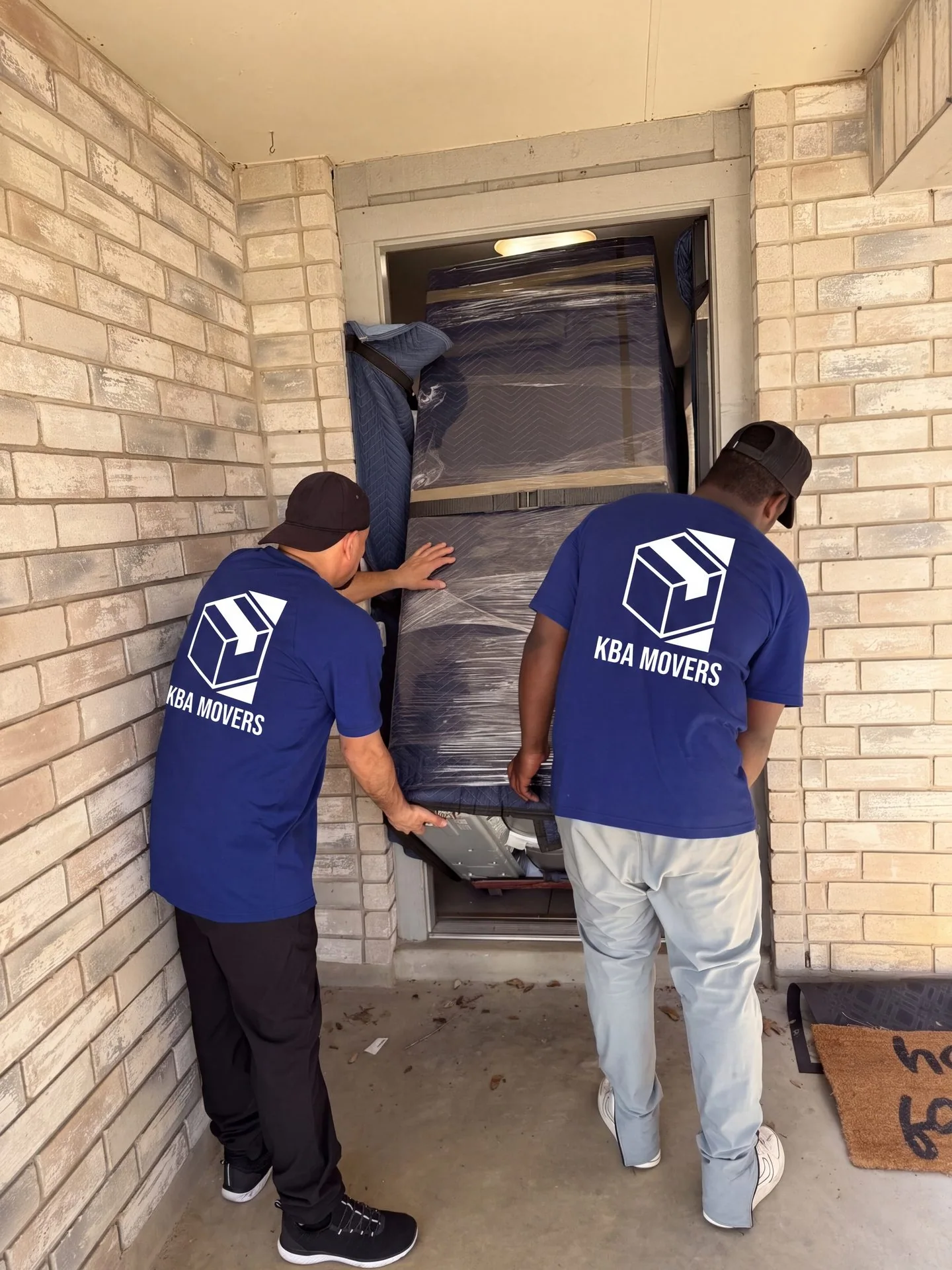
Every community has a move-in procedure and most of them are stricter than families expect. There is usually a set move-in window, sometimes a specific day and a specific range of hours. There is often a freight or service elevator that has to be reserved, a loading entrance that is not the front door, and a rule about protecting the corridor floors. Some ask for a certificate of insurance from the mover before the crew is allowed in.
Call the community this week and ask for all of it in writing. Ask, too, what they provide in the apartment. Many furnish a bed frame, some furnish a wardrobe, and moving a bed to a room that already has one is a mistake families make every week. Ask whether the room's dimensions and door widths are in the welcome pack, and if they are not, measure them yourself, because a sofa that fit the plan may not fit the door.
Pass every rule to the mover as soon as you have it. A crew that arrives at the front entrance at nine when the community allows side-entrance moves from one o'clock waits, and the waiting is on the clock.
Five days out: pack the room, not the house
The house is not moving; a room's worth of it is. Pack only what is going to the community, and pack it as a room. Boxes labeled by where they land in the new apartment, not by which room of the old house they came from. Bedroom, bathroom, sitting area, kitchenette. Keep the box count small and the boxes light, because a person in their eighties will be opening some of them.
The things that have to stay with the person, and never on the truck, are the same on every move of this kind and worth writing down: medication and the schedule it is taken on, glasses and hearing aids with their chargers, the phone and its charger, wallet, keys, identification, the paperwork the community asked for, a change of clothes, and whatever they hold onto when they are anxious, which might be a photograph, a radio, or a particular blanket.
- Medication, the dosing schedule, and anything the community's nursing staff has asked to see
- Glasses, hearing aids, dentures, mobility aids and their chargers
- Phone, charger, address book, and a written list of family numbers
- Identification, insurance cards, and the signed community paperwork
- Bedding for the first night, so the bed is made before the boxes are opened
- The one or two objects that make a room theirs, unpacked first
Two days out: decide where every piece goes
Draw the new apartment on a sheet of paper with the furniture in place, and give the drawing to the crew lead on the morning. The reason is simple: the person moving should not be asked where the dresser goes while standing in a corridor with a crew waiting. They decided that weeks ago. The drawing carries the decision.
Decide, too, what leaves the old house that day and what stays for later. A move-in day and a house clearance are different jobs with different paces, and combining them means the person watches their home being emptied on the day they are supposed to be settling into a new one. Book the removal of what is not going, whether to family, to donation or to disposal, for another day.
Move-in day: who is where
One family member at the old house with the crew, one at the community, and the person moving with whoever they are calmest with. Some people want to watch the truck loaded and some find it upsetting, and the right answer is whichever they prefer. Many families take the person to lunch, or to the community's dining room, while the loading happens, and bring them to the apartment when the bed is made and the chair is by the window.
At the community, the family member meets the crew at the entrance the community named, walks them to the apartment, and works from the drawing. Furniture first, then the bed made, then the boxes opened in order of what the evening needs: bathroom, bedside, the kitchenette. Empty boxes go out with the crew, not into a corner.
Introduce the person to the staff on their floor before the family leaves. The first night in a new place is easier when a name is attached to the face that checks in.
The days after
Plan to be back the next day and to visit often for the first couple of weeks, not to unpack but because the transition happens after the move rather than during it. Small things surface: the reading lamp is on the wrong side, the television remote was left behind, the pharmacy delivery has to be redirected.
Change the address with the pharmacy, the doctor's office, the bank, and the post office in the first week, and let the community know who the family contact is for anything they cannot resolve on the floor. The old house can wait. The person could not.