
How many movers do you need?
Crew size sets your hourly rate, and hours set your bill, so the two pull against each other. The question is not which crew is cheaper per hour, it is which crew finishes your particular move for less money in total.
Why two movers is not automatically cheaper
A smaller crew costs less per hour and takes longer. Whether that trade works depends on whether the extra person actually removes hours, and that depends almost entirely on your access.
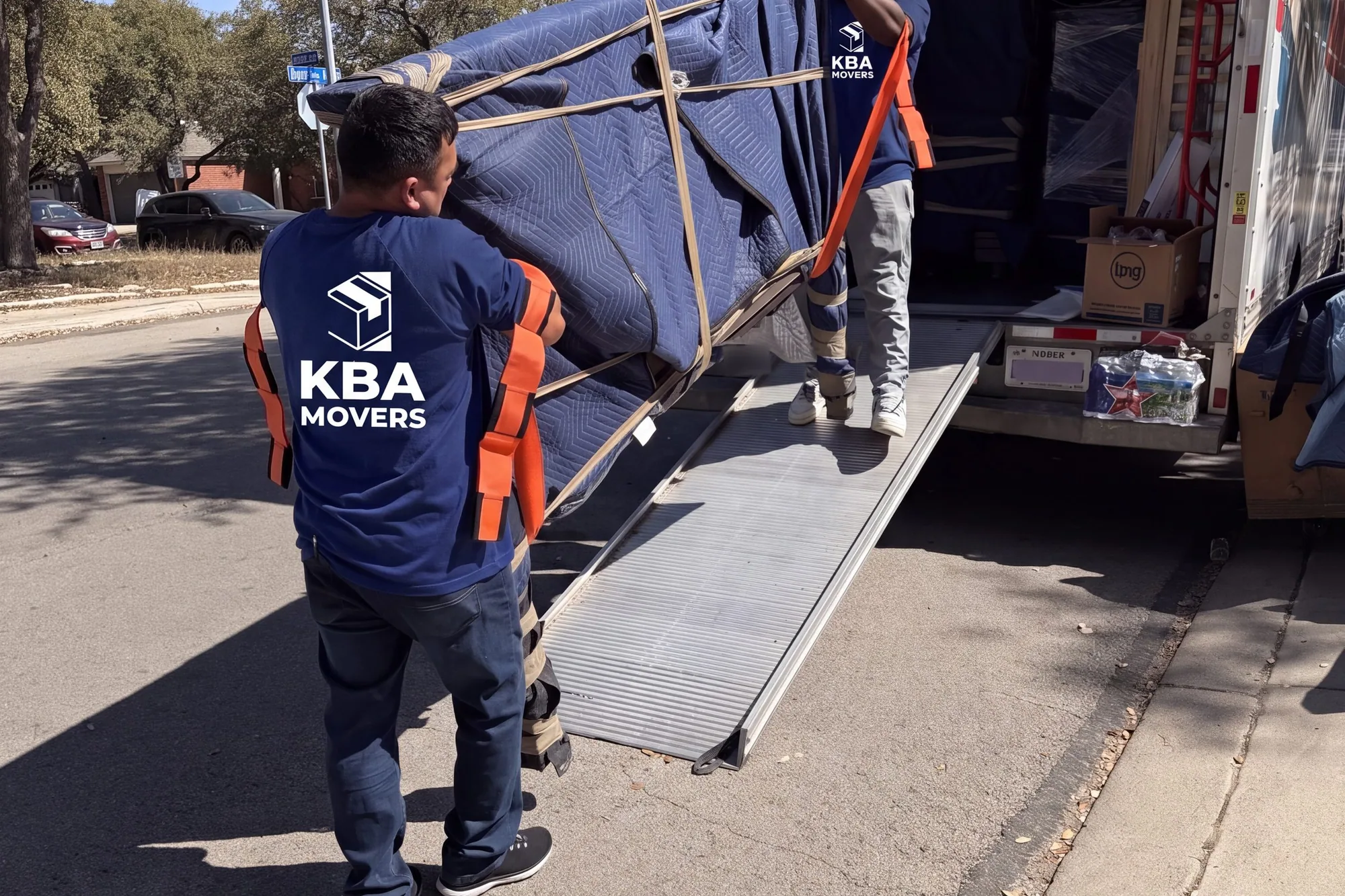
On a flat carry with the truck at the door, a third mover adds meaningful throughput: two carrying while one loads and stacks the truck properly means nobody is standing still. On a job with a long carry or a stairwell, the third person is even more valuable, because the bottleneck is the walk and more walkers clears it faster.
Where a small crew genuinely wins is a compact load with good access, where the truck fills before the extra hands would have paid for themselves.
What actually decides it
Room count is the weakest input and the one everyone leads with. A three-bedroom house that has been decluttered and packed is a different job from a three-bedroom house with a full basement, a garage and a shed, and no crew size recommendation based on bedrooms alone survives that.
The useful inputs are volume, access and time pressure. Volume is roughly how many boxes plus how much furniture. Access is stairs and carry distance at both ends. Time pressure is whether there is a hard deadline: an elevator booked for a window, a closing that afternoon, a lease that ends at noon.
- How much there is once the things you are not taking have gone
- Stairs at either end, and whether the stairwell turns
- How far the truck will actually be from the door
- Whether anything needs two people minimum: a piano, a safe, an appliance, a large wall unit
- Whether the day has a hard finish time you cannot miss
The case for one more than you think
If your move has a deadline that cannot slip, the larger crew is usually the right call regardless of the arithmetic. Running out of time on a move is far more expensive than the extra hourly rate, because the fallback is a second trip, an overnight in a truck, or a set of keys handed over with the garage still full.
The same logic applies to a job with a lot of stairs. Stairwells are where a short crew loses time fastest, and the loss compounds through the day as people tire.
Ask for the comparison
This is a question worth putting directly to whoever writes your quote. Describe the volume, the stairs and the parking at both ends, then ask what the likely hours look like at two movers and at three, and what the total lands at either way. The same question is worth asking about an office move, where an extra pair of hands can mean the desks are working a day sooner.
A company that has seen a few thousand moves can make that call far better than a booking form can, and the answer sometimes goes the way you did not expect.